




Free Guide · Updated 2026
The Complete Guide to Solar Panel Costs in the UK (2026)
Everything you need to know before getting a quote – installed prices, payback periods, grants, battery storage, and how to choose the right installer. Written in plain English for UK homeowners and businesses.
Ready for your free quote?
Ready to get a free quote or have a question? Fill in the form and we’ll be in touch within one working day.
Why 2026 is the right year
Why are so many UK homes and businesses going solar right now?
Solar panel costs have fallen by around 40% since 2020. At the same time, electricity bills have risen sharply. The combination has transformed the financial case for solar -— what once took 15+ years to pay back now pays back in 7–10 years for most UK properties.

High electricity bills
Solar directly reduces what you buy from the grid

Energy independence
Less exposure to volatile energy prices

0% VAT on solar installations until March 2027
Saving £1,000–£2,000 upfront

EPC improvement
Essential for landlords ahead of incoming minimum standards

How solar panels work
How do solar panels actually work?
Solar panels contain photovoltaic (PV) cells that convert daylight – not just direct sunlight -into direct current (DC) electricity. An inverter converts this to the alternating current (AC) your home or business uses. Any surplus electricity can be exported to the grid via the Smart Export Guarantee, or stored in a battery for later use.
A common misconception is that solar panels do not work in the UK’s cloudy climate. They do – they generate electricity from daylight, not heat. Output is lower on overcast days, but UK panels still generate meaningful electricity year-round. South-facing roofs at a 30–45 degree angle produce the most, but east and west-facing roofs are also viable.
Solar panel installation costs UK 2026
How much do solar panels cost in the UK in 2026?
All prices below are fully installed – including panels, inverter, mounting hardware, wiring, DNO notification, and MCS certification. 0% VAT applies to all residential and eligible commercial solar installations until March 2027.
| System Size | Typical Property | Installed Cost 2026 | Annual Saving | Payback Period |
|---|---|---|---|---|
| 3kW (8–10 panels) | 1–2 bed / small home | £4,000–£5,500 | £350–£500/yr | 8–12 years |
| 4kW (10–12 panels) | 3 bed semi-detached | £5,500–£7,500 | £450–£700/yr | 7–10 years |
| 6kW (14–18 panels) | 4–5 bed detached | £7,000–£9,000 | £600–£900/yr | 8–11 years |
| 4kW + battery (5kWh) | 3 bed — max savings | £9,000–£12,000 | £700–£1,050/yr | 9–12 years |
| 10–50kW commercial | Office / warehouse / retail | From £15,000 | Significant - varies | 5–8 years |
Useful benchmark: The median installed cost for a domestic system in England is approximately £1,565 per kWp as of early 2026. If a quote comes in significantly above £2,200 per kWp for a straightforward installation, ask questions about panel quality and warranty terms.
Smart Export Guarantee explained
What is the Smart Export Guarantee (SEG)?
The Smart Export Guarantee is a government-backed scheme that requires licensed energy suppliers to pay you for electricity you export to the grid. Rates vary by supplier and tariff typically between 4p and 15p per kWh — and are set by the supplier rather than the government.
To receive SEG payments you need:
01.
A solar panel system with MCS certification
02.
A smart meter installed by your energy supplier
03.
A SEG tariff signed with a licensed SEG licensee
Always compare SEG tariffs before choosing a supplier. The rates vary significantly and can make a meaningful difference to your annual return. Octopus Energy, E.ON, and Ovo Energy have all offered competitive SEG rates in 2026.
Should you add battery storage?
Should you add a battery to your solar system?
A solar battery stores surplus electricity generated during the day for use in the evening — when panels are not generating but electricity prices are at their peak.
When a battery makes sense:
01.
You are out during the day and use most electricity in morning and evening
02.
You are on a time-of-use tariff where evening electricity is more expensive
03.
You want maximum energy independence and resilience
04.
You are pairing with a heat pump — the combination is particularly effective
When a battery may not be worth it:
01.
Someone is home during the day already using electricity as it is generated
02.
The additional payback period — typically 2–3 years longer — does not suit your plans
03.
Your SEG export rate is relatively high — it may be more valuable to export than store
| Battery Size | Typical Cost 2026 | Additional Annual Saving | Best For |
|---|---|---|---|
| 5kWh | £3,000–£4,500 | £180–£280 | 2–3 bed homes |
| 10kWh | £5,000–£8,000 | £300–£500 | Larger homes, high usage |
| Tesla Powerwall 3 (~13.5kWh) | ~£8,000 | £400–£600 | Maximum self-sufficiency |
Grants and incentives 2026
Grants and incentives for solar panels in 2026

0% VAT - Available Until March 2027
Solar panel installations are currently exempt from VAT - saving £1,000–£2,000 on a typical residential system. Applies to eligible commercial installations too. Applied automatically by your MCS-certified installer.

ECO4 Scheme - Free Solar for Eligible Households
The Energy Company Obligation (ECO4) scheme provides free or heavily subsidised energy improvements - inclu- for households on certain benefits or with low incomes.

Smart Export Guarantee - Ongoing Income
You receive payment for every unit of electricity you export. This is ongoing income for the life of the system - not a one-off grant. Rates range from 4p -15p per kWh depending on your supplier.
How it works
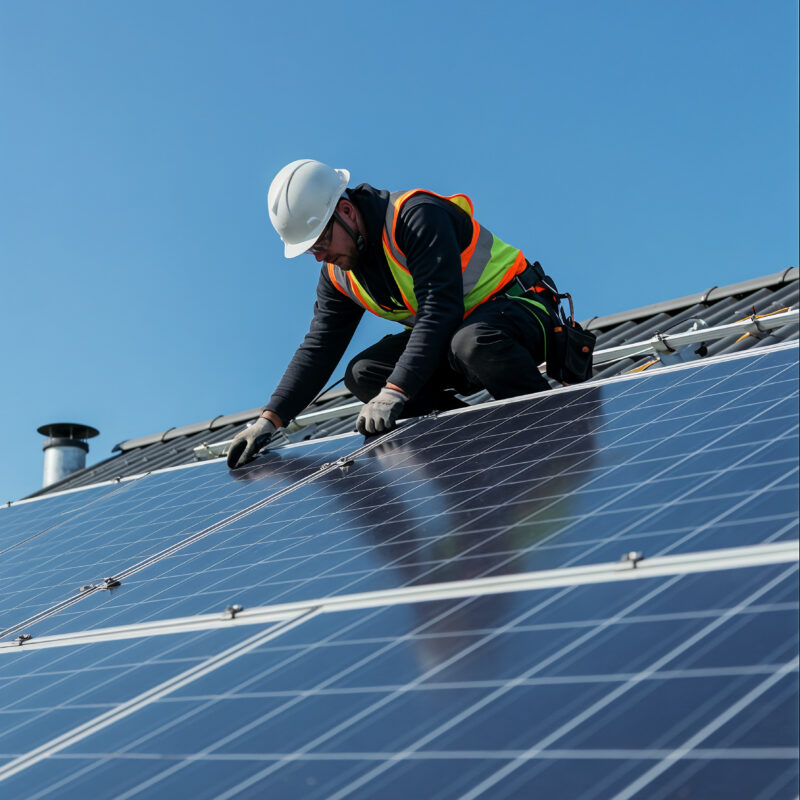
From quote to installation in four steps
No cold calls. No pressure. One vetted installer matched to you.
How to choose a solar installer
10 questions to ask your solar installer before signing anything
A reputable MCS-certified installer will answer all of these clearly and in writing. If any question is deflected or the answer is vague — that is useful information.
01.
Are you MCS certified? (Essential — required for SEG payments and grant schemes)
06.
Is scaffolding included in the quote?
02.
Are you a member of the Renewable Energy Consumer Code (RECC)?
07.
Do you handle the DNO notification?
03.
What brand of panels are you supplying and what is the product warranty?
08.
Is the MCS certificate included in the price?
04.
What is the panel performance warranty — how much degradation is expected over 25 years?
09.
What monitoring system is provided?
05.
What inverter brand are you using and what is the warranty?
10.
What is your process if there is a fault or roof damage during installation?
You should receive a detailed, written quote covering all of the above.
A quality installer is transparent about every element of the job before you commit.
Commercial solar panels UK
Solar for businesses - additional considerations
- Larger system sizes typically offer shorter payback periods – 5–8 years vs 7–11 for residential
- Commercial properties can claim capital allowances on solar installations – speak to your accountant
- Planning permission may be required for some commercial roof installations
- The Smart Export Guarantee applies to commercial systems under 5MW
- EPC requirements for commercial properties are tightening – solar can help meet minimum standards
- Power Purchase Agreements (PPAs) allow zero upfront cost in exchange for a long-term energy supply contract
Testimonials
What Our Clients Say
Real solar panel installation quotes – and what happened next
I got three quotes through other sites and was bombarded with calls. Clean Energy Quotes matched me with one installer - one call, one clear price, done. Our bills dropped immediately.
As a landlord with four properties, the solar panel installation quotes stacked up beautifully. Three properties are now EPC C - much easier to let and mortgage
We installed a 20kW commercial system on our warehouse roof. Electricity costs cut by 60%. Best decision we made - ROI in under five years
Ready for your free solar panel installation quote?
We match you with one trusted MCS-certified installer in your area. Personalised quote, no cold calls, no obligation
FAQs
Yes. Solar panels generate electricity from daylight, not direct sunlight. The UK averages 1,100–1,500 peak sunshine hours annually — enough to make solar financially viable in every region.
Most modern solar panels carry a 25-year performance warranty guaranteeing at least 80% of original output at year 25. In practice, panels often last 30+ years. The inverter typically needs replacing after 10–15 years at a cost of £500–£1,500.
In most cases no. Solar panels on residential properties are permitted development in England, Scotland, and Wales, provided they meet certain criteria. Always check with your local authority if your property is listed or in a conservation area.
Reputable MCS-certified installers are trained to install panels without voiding roof warranties. Ask your installer specifically about this and ensure it is addressed in the installation contract.
Yes — and it is an excellent investment. Solar improves EPC ratings, can justify higher rents, and qualifies for the 0% VAT exemption. Our matched installers have specific experience with landlord installations.
Contact us and we will match you with an alternative MCS-certified installer in your area at no charge. We stand behind every match we make — if it is not right, we will find you someone who is.
A typical 4kW system saves £450–£700 per year on electricity bills before Smart Export Guarantee payments. Combined with a battery, annual savings can reach £700–£1,050 — with a payback period of 7–12 years.
A 3kW system costs £4,000–£5,500 fully installed including 0% VAT. This suits smaller homes and typically generates 3,000–3,400 kWh per year — see our full [Solar Panel Installation Quotes] page for a complete breakdown.